Ogle Design Principle #1: Sculptural Quality
According to the late Tom Karen of Ogle Design, there are thirteen product design principles that designers must consider when designing a product. These principles are found in his autobiography, Toymaker. Over the next several weeks, I will go over each one, provide examples, and discuss how you can implement them into both your physical and digital products.
First, why Tom Karen’s design principles? Tom Karen was Chief of Design for Ogle, a car designer and manufacturer based in England. Throughout his career, he worked on planes, cars, and toys. He designed eye catching products such as the Raleigh Chopper and the Bond Bug.
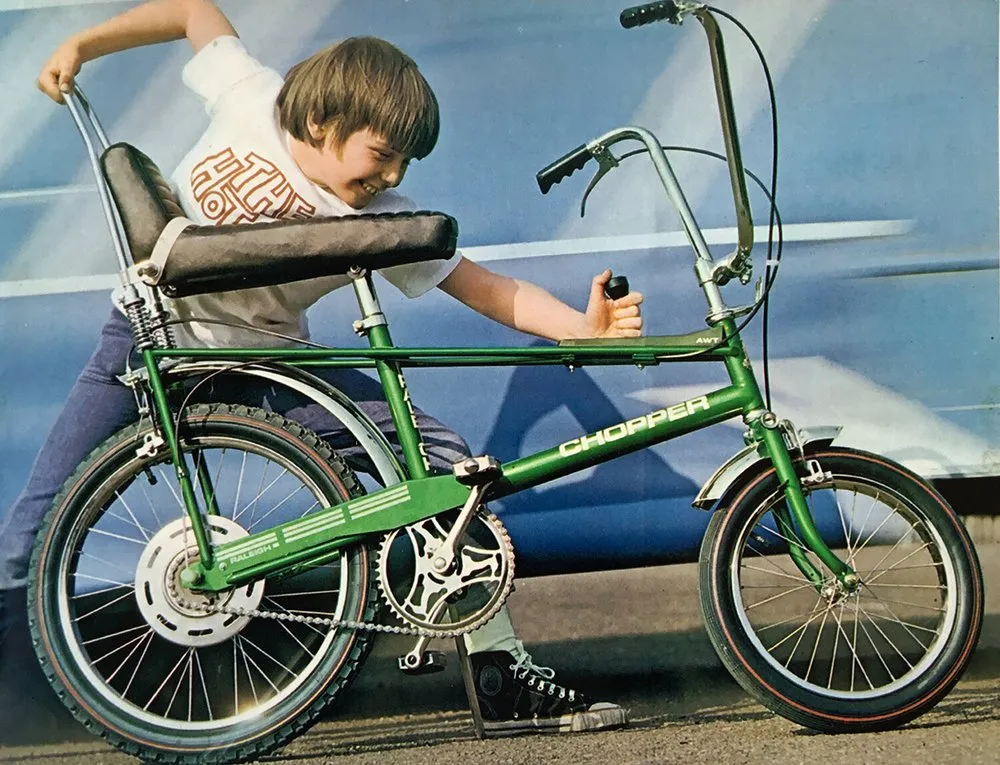
Initial sketches of The Chopper (tomkarendesigner.co.uk)
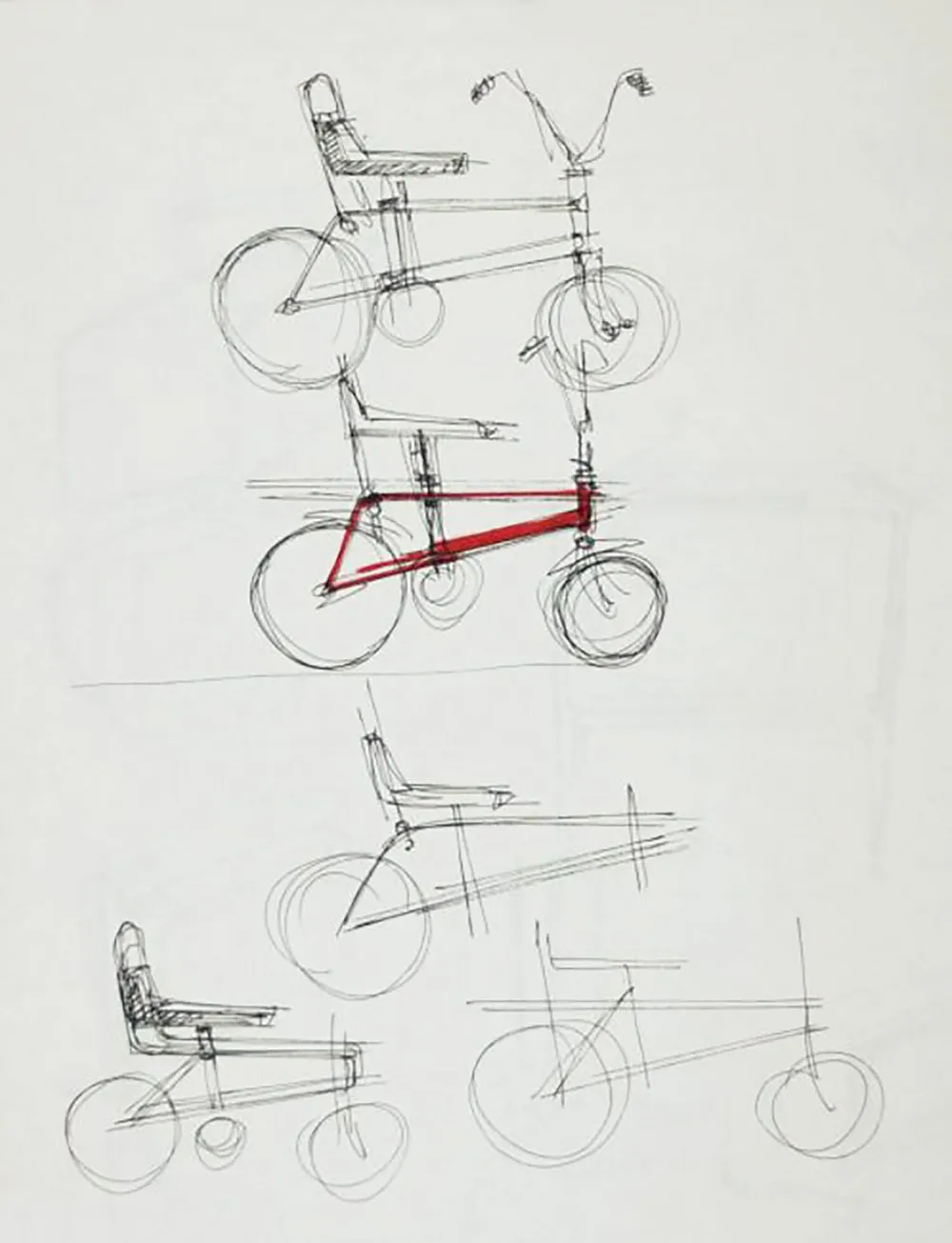
Initial sketches of The Chopper (tomkarendesigner.co.uk)
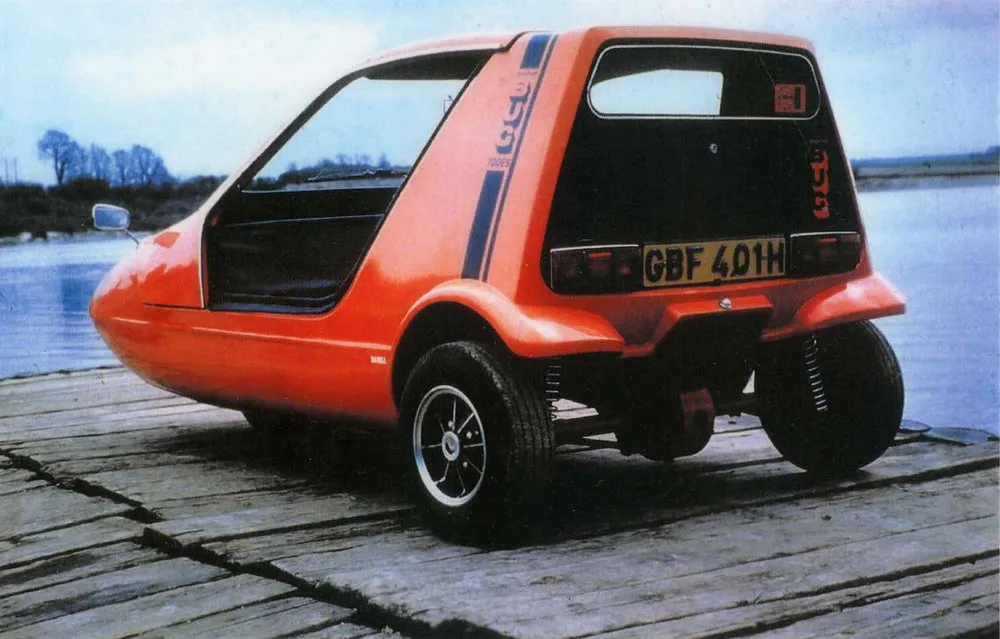
Original Bond Bug launched in 1970
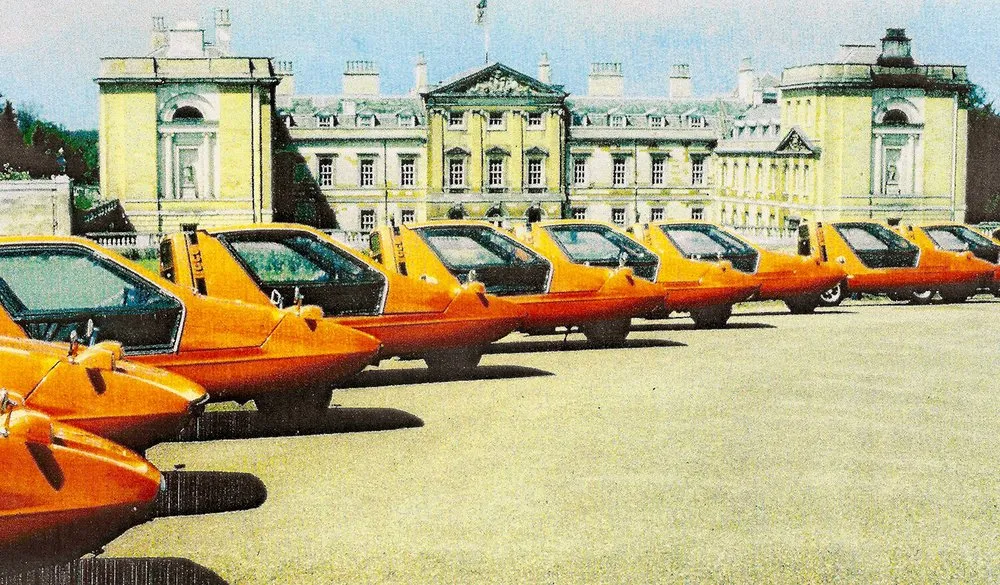
Initial launch of the Bond Bug in 1970 (tomkarendesigner.co.uk)
While some of his products may be controversial, we can appreciate the ingenuity and the spirit found in these products. Without him, we may have never had the iPhone. He counseled Sir Jony Ive, when Ive was considering abandoning design for another profession.
According to Ive, “I am so grateful for [Tom Karen’s] encouragement…His practice was optimistic and conspicuously responsible. He perfectly embodied the ideals and values of a generation of designers that took the responsibility of their profession seriously.”
Principle 1: Sculptural Quality
This first principle applies to physical products and only focuses on form. Later principles will apply to both 3D and 2D designs. Additionally, discussions about color, material, texture, etc. will be in later articles.
According to Tom Karen, products need to have a sense of “rightness.” A product must be inviting to touch. It must welcome user interaction. A great product is like a sculpture. It considers everything from the smallest to the largest detail where the curves, edges, and surfaces work harmoniously.
The product must also consider the context in which it is used. A fancy fork is used indoors and doesn’t have to consider the outside environment. A car, however, is made to be used outside and to move from place to place. This impacts where the shadows and light fall onto the product, making the form change in the lighting.
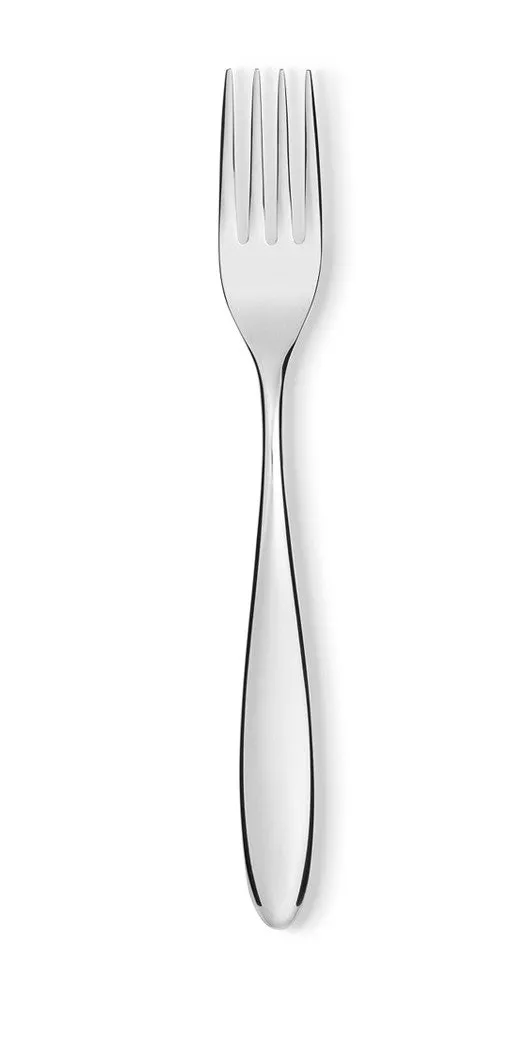
Alessi Mami fork designed by Stefano Giovannoni
Example: Alessi Tea Rex designed by Michael Graves
This Alessi Tea Rex has a sense of sculptural quality. The handle grip looks easy to hold. The body of the kettle has a large base, implying that it is supposed to sit on a counter top. I can appreciate the handle’s circularity, because it implies a feeling of motion and tells the user in that you are supposed to point it downwards. Lastly, the spout looks like an elongated version of the pot, therefore, the forms fit together.
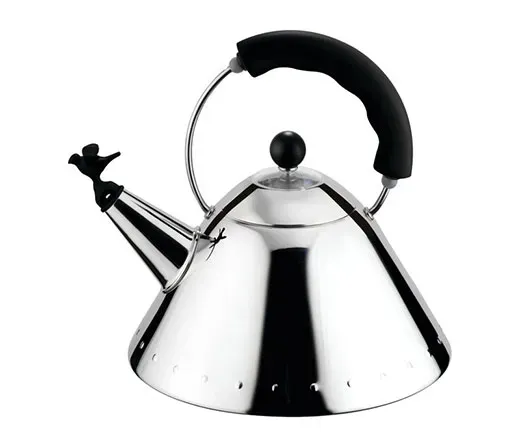
Alessi Tea Rex designed by Michael Graves
Application
Products that have a sculptural quality make the user feel like they are more appreciated. Something that is beautiful and works well will garner care and meaning. Products that catch my eye, such as vintage cars, have elements of intentionality and detail that seems to have slipped the world’s psyche in recent years

Source: Amazon
Is your product designed with sculptural quality? Or, is it designed with just the desire to get to market? When you take the time to design something that looks “right,” your customers will appreciate you more and take better care of what they purchased, which leads to more customer loyalty.
Sources:
https://tomkarendesigner.co.uk
https://www.theguardian.com/artanddesign/2023/jan/09/tom-karen-obituary
https://www.bbc.com/news/uk-england-cambridgeshire-64224795